
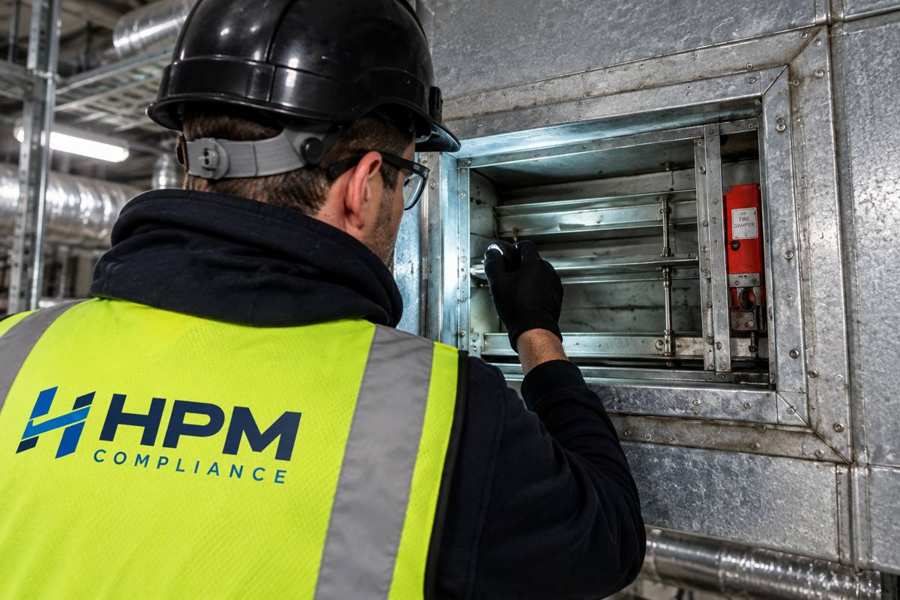
A fire damper test is a planned inspection of a fire damper and, where appropriate to the damper type and installation, an operational test to confirm that it can move through its intended action. The inspection should also leave the building manager with a usable record of what was located, what could be accessed, what was tested and what needs attention.
Why are fire dampers tested?
Fire dampers form part of the fire-resisting compartmentation of a building. They are fitted where ventilation ductwork passes through fire-resisting walls or floors so that the opening through the compartment can be protected when required.
Fire-safety measures must be maintained in effective working order. Government guidance explains that this is achieved through appropriate inspection, testing and servicing and that people appointed to carry out testing and maintenance must be competent for the work.
What happens before the test?
A good inspection starts before the damper is operated. Existing drawings, asset registers and previous reports can help establish how many dampers should be present and where they are located. On site, each damper should be positively identified and suitable access confirmed.
If a damper is concealed above a ceiling, within a riser or behind ductwork, the access opening needs to allow the inspector to safely reach and meaningfully inspect the asset. Where adequate access is not available, that limitation should be recorded.
What is checked during a fire damper inspection?
The exact scope depends on the damper and agreed inspection standard, but a structured visit can include:
- Confirming the damper location and asset reference
- Checking that suitable inspection access is available
- Visually checking the accessible damper and surrounding installation
- Looking for damage, contamination, corrosion or obstruction
- Checking that moving parts are not obviously restricted
- Operating the damper where appropriate to its type and the agreed method
- Confirming that it closes and can be reset or returned to its correct position where applicable
- Recording the outcome and any limitations
- Taking photographs to support the inspection record
Does the damper have to be physically operated?
Where the damper type and installation allow functional testing, the purpose is to demonstrate operation rather than relying only on appearance. The exact method depends on whether the damper is spring operated, fusible-link operated, motorised or part of a wider smoke-control system.
The manufacturer information, fire strategy and relevant standard should be considered when deciding the correct test method. An inspector should not force or dismantle an asset in a way that creates damage or falls outside the agreed scope.
What happens if the damper cannot be accessed?
An inaccessible damper should not be recorded as a successful test. Its location and the access problem should be documented so the Responsible Person can decide how suitable permanent access will be provided.
What should a fire damper report contain?
The report should make it possible to identify the inspected asset again on the next visit. Depending on the agreed scope, useful information includes the asset number, location, date, damper type where known, inspection or test outcome, photographs, defects, access limitations and recommended follow-up actions.
For larger buildings, consistent asset naming is particularly important. It helps prevent dampers being missed and makes recurring inspection programmes easier to manage.
What happens when a damper fails?
A failed or action-required result should state what was observed rather than simply marking the damper as failed. The appropriate remedy may be cleaning, adjustment, repair, replacement, improved access, further investigation or work to the surrounding installation. The remedial action should then be tracked by the Responsible Person or facilities team.
How often should the test be repeated?
The correct interval depends on the type of damper and the requirements applicable to the building. For more detail, read our guide on how often fire dampers should be tested.
Fire damper testing across South Yorkshire
HPM Compliance provides fire damper inspection and testing across Rotherham, Sheffield, Doncaster, Barnsley, Mexborough and surrounding areas, with an emphasis on clear asset records, photographic evidence and practical reporting.
See the full Fire Damper Testing service for details of the service scope.
Need a fire damper inspection?
Send us the site location, approximate damper numbers and any existing drawings or previous reports and we can discuss the scope and quotation.
Request a Fire Damper QuoteThis guide provides general information only. It does not replace a fire risk assessment, fire strategy, manufacturer instructions, applicable legislation, relevant standards or advice from a competent fire-safety professional.