
Fire Damper Testing
Commercial fire damper inspection and testing with clear asset identification, photographic evidence and practical reporting.
Professional fire damper inspection and testing for commercial buildings
Fire dampers form an important part of a building’s passive fire protection. They are installed where ventilation ductwork passes through fire-resisting walls or floors and are designed to close when required, helping to maintain compartmentation and reduce the spread of fire through the duct system.
The fire damper testing service is structured around identifying each accessible damper, checking its condition and access, testing its operation where appropriate, recording the outcome and giving the client a clear record of what was found.
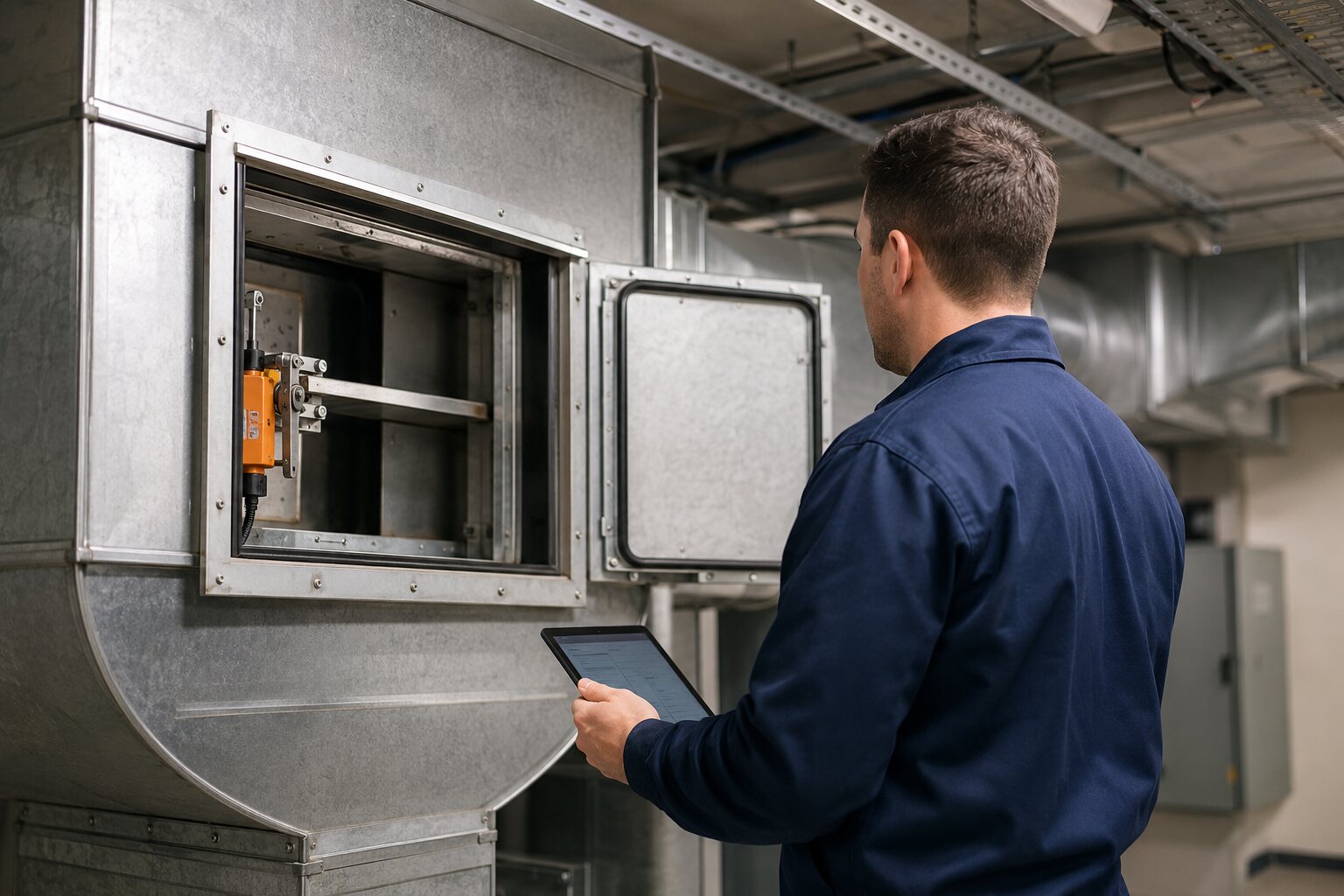
What the fire damper testing service can include
- Identification and location recording for each accessible fire damper
- Visual inspection of the damper and accessible surrounding installation
- Check of access arrangements and obvious obstructions
- Functional operation testing where appropriate to the damper type
- Observation of condition, damage, contamination or restrictions to movement
- Photographic evidence linked to the inspected asset
- Recorded pass, fail or action-required outcome where applicable
- Clear recommendations where defects, access issues or further investigation are identified
- Digital reporting suitable for facilities and property-management records
Why fire damper testing matters
A fire damper cannot be relied on simply because it is present in the ductwork. Access may be restricted, components can become damaged or contaminated, and a damper may fail to operate correctly when tested. Periodic inspection provides evidence of condition and helps dutyholders identify issues that require maintenance or further investigation.
Good records are particularly important on larger buildings and multi-site estates. Asset identification, location details and photographs make it easier to understand what has been inspected and to track future testing or remedial action.
Access and identification
Fire dampers are often installed above ceilings, inside risers or in other concealed parts of a building. Suitable access is essential for a meaningful inspection. Where an asset cannot be safely reached or the available opening does not provide adequate access, this is recorded rather than presenting the damper as fully inspected.
Where site information is available, existing asset numbers and drawings can be used. Where appropriate, dampers can also be organised into a clearer location-based register to support future visits.
Functional testing
The exact test depends on the type and arrangement of the damper. Where appropriate, the damper is operated to confirm that the mechanism can move through the required action and return or reset correctly. The surrounding accessible condition is also observed for anything that could affect performance.
If a damper cannot be operated safely, is inaccessible, appears damaged or does not perform as expected, the finding is recorded clearly so the responsible person can arrange the appropriate next action.
What you receive after testing
Customers receive a structured record of the inspected dampers. Depending on the agreed requirements, this can include asset or location reference, test date, test result, photographic evidence, observations and any recommended follow-up action.
For recurring and multi-site work, maintaining consistent asset records makes future visits easier to plan and gives facilities teams a clearer inspection history.
How often should fire dampers be tested?
The appropriate inspection and testing interval should be based on the current applicable guidance, the type of damper, manufacturer information, the building’s fire strategy and the environment in which the damper is installed. Higher-risk or contaminated environments may require more frequent attention.
Rather than applying a generic interval without context, the aim is to organise a testing programme that reflects the building, its fire-safety arrangements and the relevant requirements in force at the time.
Need fire damper testing for your building?
Tell us the site location, approximate number of dampers, any existing asset list or drawings and what access information you have. We can then discuss the testing requirement and provide a clear quotation.
Request a Fire Damper QuoteHow it works
A clear process from asset list to completed report.
Review the site
Confirm locations, approximate damper numbers, existing records and access arrangements.
Inspect & test
Identify each accessible damper, inspect its condition and complete the appropriate operational check.
Record findings
Capture the asset result, observations and photographic evidence in a consistent format.
Provide report
Issue the agreed inspection records and clearly highlight defects or follow-up actions.
Fire Damper FAQs
Common questions about fire damper testing
Useful information for facilities teams, landlords and organisations responsible for building fire-safety maintenance.
What is a fire damper?
A fire damper is installed in ventilation ductwork where the duct passes through fire-resisting construction. It is designed to close when required to help maintain the fire separation between different parts of the building.
What do you check during a fire damper inspection?
The inspection can include identification and location, access condition, visual condition, obvious obstruction or contamination, functional operation where appropriate, photographs and a recorded result.
Does every fire damper need to be accessible?
Suitable access is important because the damper and its operating mechanism need to be available for inspection, testing and maintenance. If adequate safe access is not available, the limitation should be recorded and appropriate access may need to be provided.
How often should fire dampers be tested?
The correct interval depends on the applicable current guidance, damper type, manufacturer information, building fire strategy and site conditions. Some environments or damper arrangements can justify more frequent testing, so the programme should reflect the actual building rather than rely on a generic assumption.
What happens if a fire damper fails?
The failed or action-required result is recorded along with the relevant observations and photographs. The responsible person can then arrange repair, specialist investigation or replacement as appropriate. The inspection itself does not automatically constitute remedial work.
Do you provide photographs and a report?
Yes. The testing record can include damper identification and location, photographs, findings, test outcome and identified follow-up actions so the client has a usable record for their building files.
Can you test fire dampers across multiple sites?
Yes. Testing can be organised for multi-site customers using consistent asset and location records, making future inspections and reporting easier to manage across an estate.
Can fire damper testing be carried out outside normal working hours?
Where access and site arrangements allow, appointment times can be planned around occupied buildings and operational requirements. This can be particularly useful for schools, care settings, hospitality and busy commercial premises.